
The Banlieues, Discrimination and the Algerian War
These translated excerpts are drawn from an oral history interview conducted with Worms-T in Paris, France.
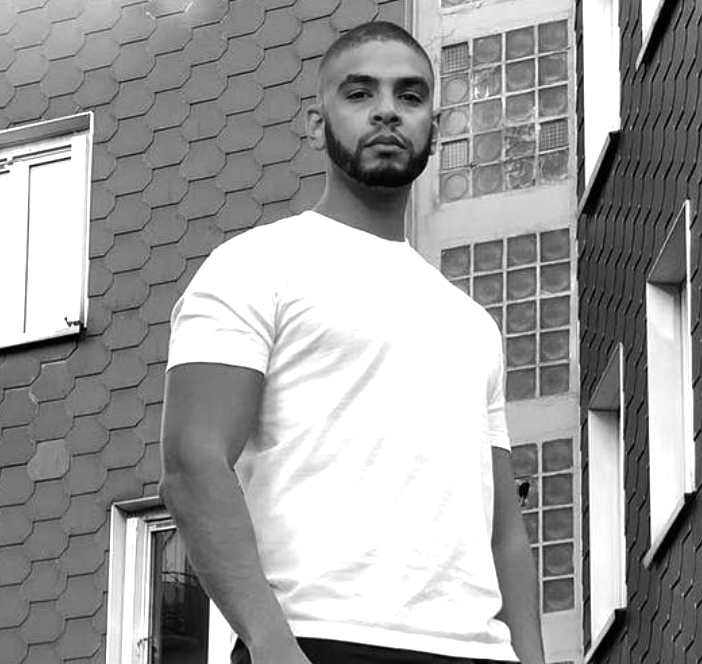
Worms-T is a French rapper of Algerian origin, born and raised in Bobigny, in the Parisian department of Seine-Saint-Denis. His parents - who had left Algeria during the war - had grown up in the Bindovilles of Nanterre in the 1960s - the most populous slum in France at the time, housing mainly Algerian migrants. Although Worms-T has had a career in hip-hop spanning a decade, he now lives in Morocco with his family where he runs his own digital marketing business.
Growing Up in Paris
“I grew up in Bobigny. It was difficult living there. We ate rocks, for real. There were months, we had to eat just rice, or just pasta. Because our parents went through huge crises and they brought up lots of children, not necessarily with many resources. As kids, we made money because we grew up having to. As a child, who will buy new trainers if you have holes, if it’s not you? What happens if you’re young and you need money straight away? For medication? Either we make money or we’re in prison, we don’t ask for money from anyone... We will never be on the street. It’s impossible. It’s not compatible with us.”
Life in the Banlieue
“When you see what’s outside, that’s when you realise how difficult it is. Its extremes. What is extreme for you, is normal for us. Loosing someone, having policeman raid your house in the morning – it’s just like opening a can of coke. It’s so repetitive: one in prison, the other is dead, involved in trafficking. From being a baby, you grow up like this. You grow up in the abyss. It has a harmful effect.”
“Here, it’s war, maybe it’s worse than a country at war. Even though we have everything, it’s another type of violence.... We grew up in a hostile environment; it’s permanently hostile; it’s always been like this. It’s hostile from the beginning right up until death. It’s animal instinct, and we all have it. We’ve always grown up like this... in adrenaline, testosterone, violence. You come home, there are cockroaches by the millions in your apartment, you go out, there are rats, you go down the stairs, there are [heroin] syringes.”
“I may be tough, but it’s because we haven’t had the choice actually, you know? They set us back so young. We had to live with these injustices. You’re forced to be hard. You can’t survive in the jungle and not be hard. It’s impossible. Everyone is hard. But it’s not our fault. No one asked for this. It’s made us hard and extremely violent. How did I even survive it here? How did I get to where I am today? Most people wouldn’t be able to last a week here, it’s too difficult. You’re immunised against fear. It makes you a powerful man. Every banlieusard is a powerful man.”
“It’s a parallel system. People say, “easy money”. Easy money? Can you imagine what the life of a drug dealer is like? You think it’s easy? They say it’s easy but they don’t understand... to go get drugs in another country, to bring it in, to have the courage and to go get it... doing I don’t know how many kilometres by car. You become paranoid. It’s not a source of pride to be a dealer, but it’s not easy either. What’s easy money? Waking up at 7 in the morning, going on the computer and typing away, getting back, seeing your children, having tea and getting your salary.”
Experiencing Discrimination and Racism
“In France, if you’re born here, but you have dark skin, or a name with African connotations, you’re not accepted anywhere. So you’re what? If you go to Algeria, you’ll be an immigrant, and in France you won’t be considered French, even if you have a French identity card. If you’re next to a ‘Jean Michel’, he’ll be prioritised and you’ll be left on the floor. That’s the reality. I’m French by paper and I feel French by paper. I would like that France loves me like Algeria, but it’s not possible. I don’t know why. We’ll never be accepted.”
“I’d have loved to live in the 16th arrondissement in Paris. Well no. They put all the Algerian families in Bobigny, in the Courneuve. Same with all Black families. They put us in HLMs, only with Blacks and Arabs. But we are the ones who represent France. We are the ones who built France. Who built France? If it’s not the Senegalese Tirailleurs? You see those beautiful monuments in Paris? It’s thanks to money from immigrant labour that they built these monuments. People have to accept that we are French. It’s immigrant youth who represent France internationally, whether its rappers or footballers.”
“We know our children will be subjected to racism. My daughter will be in difficulty if she wants to cover up. This isn’t a choice, sadly we are subjected to this.”
Early Encounters with the Police
“One day, as I left school and arrived at Pablo-Picasso in Bobigny, I was stopped by a police officer who told me to give him my identity card, so I did. He said: “But... you’re of what origin?”. I said, “French, I gave you a French identity card”. It’s already a lack of respect to ask me what origin I am... I thought, ‘here I’m giving you my French identity card, I’m born in France, I’m like you’. He does his check. It was an identity card that was brand new and had been given to me the previous week. When he gave it back to me, it was bent and creased. That’s when I really understood that this was all dead.”
“Seeing police come to your house, breaking everything, destroying your clothes. How do you feel? When you’re small. You’re at an age of understanding. These are traumas. Once, twice, three times... It doesn’t stop. I respect the job of policemen but would never call them. We don’t call the police. They have hatred towards us because they know we are strong men. We won’t call the police, even if we have to defend ourselves.”
The Legacy of the Algerian War of Independence
“The history of France is so dark. You come here, and again, they mistreat you. We’ll never be able to coexist. It’s like a cat with a mouse. It’s impossible. It will take education, and for people to say the past is the past. France has never apologised; it’s closed its eyes. My great-grandfather was killed because of this history.”
“The Algerian War left a huge amount of dead. In Algeria there were too many dead. Five million deaths; it’s a genocide. Years later, Algerians live in France, French live in Algeria. You see... it’s like if your neighbour came to your house and killed all your family, but still moves in there. Or you move in with your neighbour who killed all your family. Even when I look at archival images, of French military In Algeria, it hurts me deeply because it’s your past. It’s your history. For me, the war isn’t finished. It even had an effect on our parents raising us... When you say you wanted to go wander around the Seine – where they massacred Algerians – they’ll say: “What? Are you crazy?”